Great villains are often the reason movies become unforgettable. While heroes drive the story forward, it is usually the antagonists who give films tension, emotion, and lasting impact. A truly great villain is not just evil for the sake of it—they are complex, charismatic, terrifying, and sometimes even relatable.
The best cinema villains challenge the hero physically, emotionally, and morally. They force audiences to question ideas about justice, power, revenge, and human nature. Some villains are frightening because of their intelligence, others because of their unpredictability, and a few because they feel disturbingly real.
Here are some of the greatest villains in cinema history who continue to dominate film discussions and pop culture.
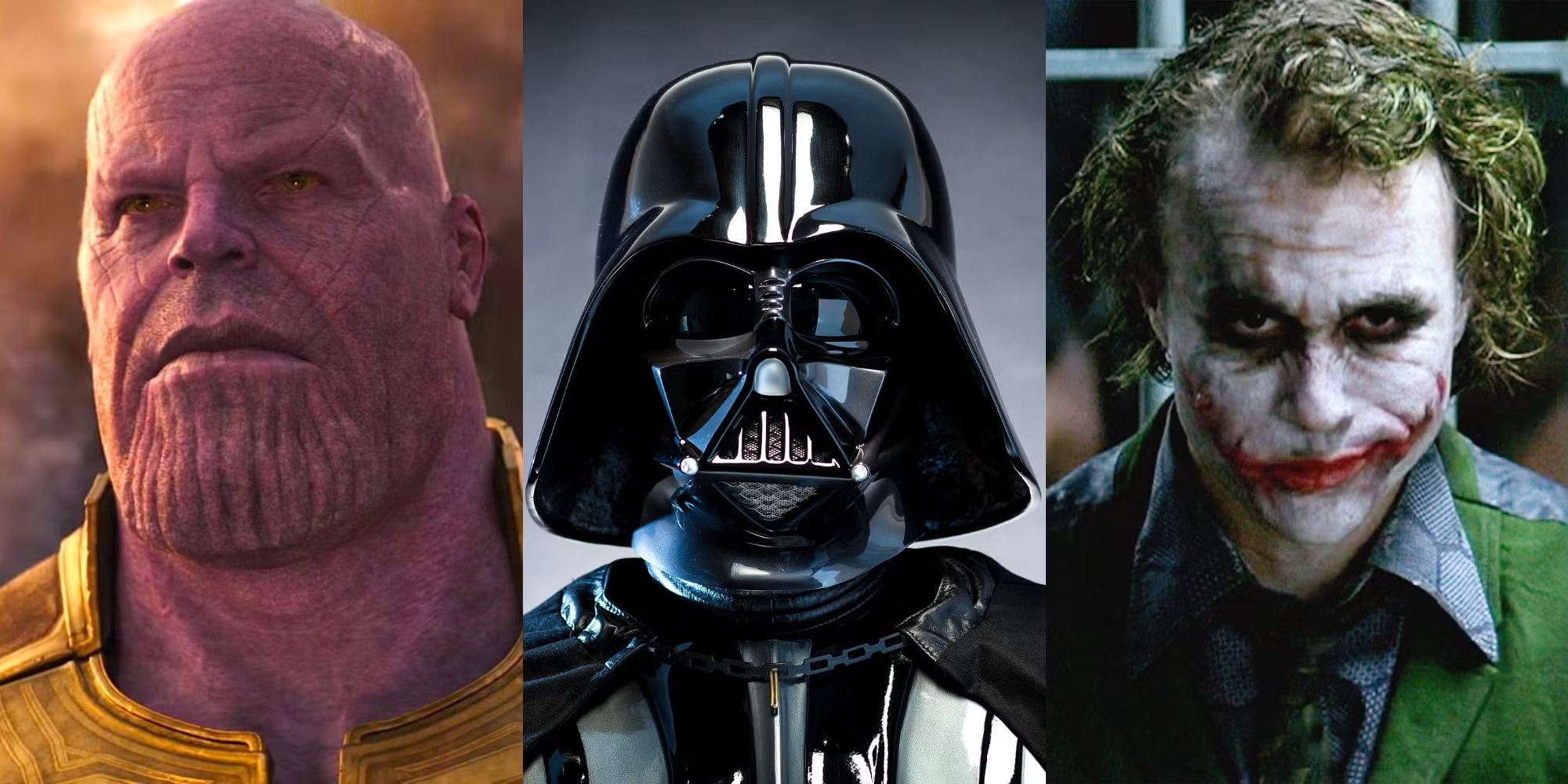
The Joker
Few villains have achieved the cultural impact of the Joker. Appearing in multiple films, the character represents chaos, anarchy, and psychological manipulation.
One of the most iconic portrayals came from Heath Ledger in The Dark Knight. His version of the Joker is unpredictable, intelligent, and terrifyingly calm, making him one of the most memorable villains ever put on screen.
Unlike traditional villains with clear goals, the Joker thrives on disorder. This makes him especially dangerous because his actions are not driven by money or power, but by ideology and chaos itself.
Darth Vader
Darth Vader is one of the most recognizable villains in film history. Introduced in the Star Wars saga, he represents power, fear, and tragedy.
What makes Vader so compelling is not just his intimidating appearance, but his emotional depth. His transformation from Anakin Skywalker into Darth Vader adds a tragic layer to his character.
His heavy breathing, commanding voice, and iconic design make him one of the most visually and emotionally powerful villains ever created.
Hannibal Lecter
Hannibal Lecter is a villain defined by intelligence and sophistication. First appearing in The Silence of the Lambs, he is a highly educated psychiatrist who is also a cannibalistic serial killer.
What makes Lecter so disturbing is his calm and polite behavior. He is often more composed than the protagonists, which creates a chilling contrast between his appearance and his actions.
Portrayed by Anthony Hopkins, Lecter became one of the most terrifying villains in psychological thriller history.
Anton Chigurh
Anton Chigurh from No Country for Old Men is a modern example of pure cinematic terror.
Unlike traditional villains, Chigurh has almost no emotional expression. He operates with a cold, mechanical sense of fate and randomness, often deciding people’s lives with a coin toss.
His silence, unpredictability, and emotionless behavior make him feel more like a force of nature than a human being. This makes him one of the most unsettling villains in modern cinema.
Norman Bates
Norman Bates, from Alfred Hitchcock’s Psycho, is one of the earliest examples of psychological horror villains in cinema.
At first, Bates appears shy, polite, and harmless. However, as the story unfolds, audiences discover his deeply disturbed personality and fractured identity.
The shocking twist surrounding his character redefined horror storytelling and continues to influence psychological thrillers today.
Thanos
Thanos became one of the most impactful modern villains through the Avengers: Infinity War and Avengers: Endgame.
Unlike many villains, Thanos believes he is the hero of his own story. His goal to balance the universe by eliminating half of all life is disturbing but logically structured from his perspective.
This ideological conflict makes him more interesting than simple destructive villains. His strength, intelligence, and emotional conviction turned him into one of the most memorable antagonists in superhero cinema.
Amon Goeth
Amon Goeth, portrayed by Ralph Fiennes in Schindler’s List, is one of the most chilling villains in historical cinema.
He is a Nazi officer whose cruelty is shown in a disturbingly realistic way. Unlike fictional villains with exaggerated traits, Goeth represents real human evil.
His unpredictability and lack of empathy make him one of the most disturbing characters ever shown in film.
The Terminator
The Terminator, introduced in The Terminator, is a villain that combines science fiction with unstoppable horror.
Played by Arnold Schwarzenegger, the character is a machine sent from the future to eliminate its target with relentless precision.
Its lack of emotion, unstoppable nature, and mechanical efficiency make it one of the most iconic action villains in cinema history.
Norman Stansfield
Norman Stansfield, from Léon: The Professional, is a corrupt and unstable DEA agent played by Gary Oldman.
What makes Stansfield memorable is his unpredictable personality. He shifts between calm professionalism and explosive violence within seconds.
His eccentric behavior, combined with brutal actions, makes him one of the most chaotic villains in modern cinema.
Sauron
Sauron from The Lord of the Rings: The Return of the King represents pure evil in fantasy cinema.
Although he rarely appears physically, his presence dominates the entire trilogy. He symbolizes corruption, power, and domination.
His influence spreads fear across Middle-earth, making him a powerful example of a villain who does not need constant screen time to feel threatening.
What Makes a Great Villain?
The most memorable movie villains usually share several key traits:
- Clear motivation (even if it is twisted)
- Strong personality or ideology
- Emotional or psychological depth
- Memorable design or performance
- Ability to challenge the hero meaningfully
Great villains are not just obstacles—they are reflections of fear, ambition, and human flaws.
Final Thoughts
Cinema history is filled with unforgettable villains who have shaped storytelling across generations. From the chaos-driven Joker to the cold logic of Anton Chigurh, these characters leave lasting impressions because they challenge audiences emotionally and intellectually.
Whether they are grounded in reality like Amon Goeth or purely fictional like Darth Vader, great villains elevate their films by creating conflict that feels meaningful and unforgettable.
In many ways, the greatest villains are what make the greatest movies truly timeless.